Queue Management System in Saudi Arabia: A Practical 2026 Guide to Smarter Customer Flow
Long waiting lines do more than test patience — they quietly drain revenue, bruise your brand, and burn out front-line staff. A modern queue management system in saudi arabia turns crowded, unpredictable waiting areas into measured, calm journeys that customers genuinely appreciate. As the Kingdom pushes toward a digital, service-first economy, smart queuing has shifted from a nice-to-have into a core part of how banks, clinics, and government offices compete in 2026.
This guide breaks down how these systems work, which features actually matter, and how to choose a setup that fits your branch network rather than fighting it.
What Is a Queue Management System?
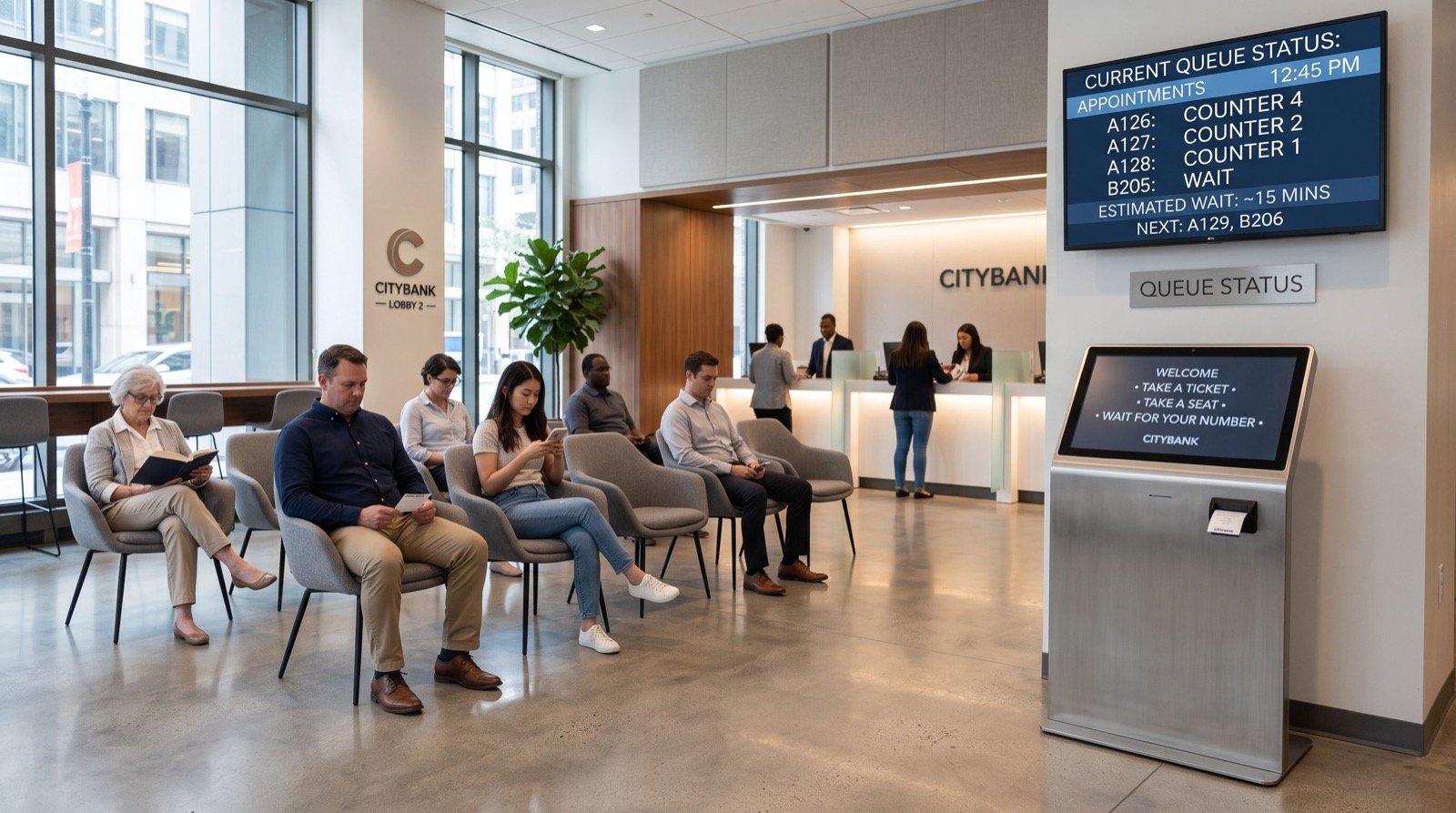
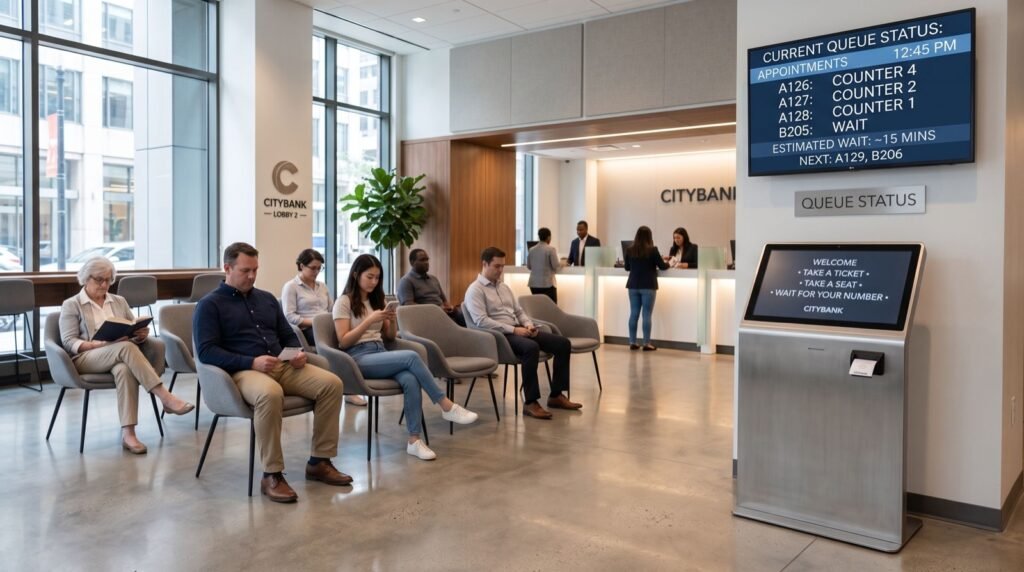
A queue management system is a mix of hardware and software that organises how people wait and get served. Instead of a single physical line, visitors take a digital ticket — from a kiosk, a QR code, or a mobile app — and wait wherever they like until a screen or SMS calls their number.
Behind the scenes, the platform routes each visitor to the right counter, balances staff workloads, and records every step. Managers finally get hard numbers on wait times, service duration, and peak hours instead of guesswork.
Why a Queue Management System in Saudi Arabia Pays Off in 2026
Saudi Arabia’s service expectations have risen sharply. Citizens who use polished government apps now expect the same smooth experience at the bank counter or hospital reception. Falling short feels jarring.
The national digital agenda reinforces this. Under Saudi Vision 2030, public and private bodies are measured on service quality and citizen satisfaction, and orderly, transparent queuing directly supports those targets.
The practical wins stack up quickly:
- Shorter perceived waits: freeing people from a physical line makes the same wait feel far shorter.
- Lower walkaways: clear position updates stop frustrated customers from leaving.
- Smarter staffing: live dashboards show when to open extra counters.
- Arabic-first design: full right-to-left and bilingual signage for local audiences.
- Hard data: service-level reports you can act on, branch by branch.
Core Features Worth Paying For
Not every deployment needs every bell and whistle, but a serious platform should cover the essentials below. Use this table as a quick checklist when you compare vendors.
| Feature | What It Does | Why It Matters |
|---|---|---|
| Virtual ticketing | Issues tickets via kiosk, QR, or app | Removes physical lines and crowding |
| Digital signage | Calls numbers on screens with audio | Clear, calm, bilingual guidance |
| Appointment booking | Lets customers reserve a slot online | Smooths peak-hour demand |
| Live analytics | Tracks waits, service time, no-shows | Drives staffing and SLA decisions |
| Feedback capture | Collects ratings after service | Links wait data to satisfaction |
How Does a Queue Management System Work?
The flow is simple from the customer’s side. A visitor checks in, receives a ticket number, and sees their position in real time. When a counter frees up, the system calls the next relevant person based on service type and priority rules.
On the management side, every event is logged. You can see that mortgage enquiries take eleven minutes on average, that Tuesday mornings spike, and that Counter 3 consistently outperforms the rest — then adjust schedules accordingly.
Many 2026 deployments also tie queuing into other customer-flow tech. Quick-service restaurants, for example, pair lobby queuing with PAR Drive Thru solutions so that in-store and drive-through demand are balanced from one unified view.
Which Industries Benefit Most?
Almost any business with a counter can gain, but a few sectors see outsized returns:
- Banking: separate flows for tellers, advisors, and VIP clients.
- Healthcare: calmer waiting rooms and clearer triage by department.
- Government services: transparent, fair handling of high volumes.
- Telecom stores: faster SIM, device, and billing resolution.
- Retail and QSR: smoother peaks and fewer abandoned carts.
How to Choose the Right System
Start with your pain points, not a feature list. If walkaways are your problem, prioritise mobile ticketing and position updates. If reporting is weak, insist on granular analytics and exportable SLAs.
Then weigh these factors:
- Scalability: can it grow from one branch to fifty without re-architecting?
- Integration: does it connect to your CRM, booking, and signage?
- Local support: is there Arabic-language help and on-the-ground service?
- Compliance: does it respect local data-handling expectations?
Implementation quality matters as much as the software. Just as a household trusts dependable specialists to move a home without breakage, you want an integrator who installs, trains, and supports without disrupting daily operations. The best vendors treat go-live as the start of the relationship, not the end.
A Field Tip From Real Deployments
One lesson comes up again and again: pilot a single busy branch before a full rollout. Run it for three to four weeks, compare the analytics against your old estimates, and let front-line staff flag friction. The data almost always reveals that peak hours are offset from what managers assumed — a small scheduling fix that pays for the pilot many times over.
Common Pitfalls to Avoid
Even strong technology stumbles when the rollout ignores people. The most frequent mistakes are predictable — and avoidable.
- Skipping staff training: counters ignore the routing logic and revert to old habits, wasting the investment.
- Over-complicating service types: too many ticket categories confuse visitors; start simple and refine with data.
- Ignoring the analytics: a dashboard nobody reviews is just decoration. Assign an owner to read it weekly.
- Forgetting the mobile channel: in 2026, customers expect SMS or app updates, not just a wall screen.
Address these early and the system delivers from day one rather than after months of frustration. A short change-management plan — who does what, and how success is measured — is worth as much as the hardware itself.
Frequently Asked Questions
How much does a queue management system in Saudi Arabia cost?
Pricing depends on branch count, hardware, and whether you want appointment booking and analytics. Many providers offer modular tiers, so a single clinic pays far less than a national bank network. Ask for a per-branch quote plus support costs.
Can it work fully in Arabic?
Yes. Reputable 2026 platforms ship with right-to-left interfaces, Arabic voice announcements, and bilingual signage so both Arabic and English speakers are served comfortably.
How long does installation take?
A single branch can go live in days once hardware arrives. Multi-site rollouts are usually phased over several weeks so staff training and integration stay smooth.
Does it integrate with appointment booking?
Most do. Customers reserve a slot online and are merged into the live queue on arrival, which flattens peak-hour pressure and cuts no-shows.
Conclusion
In a market where service quality is now a competitive battleground, a well-chosen queue management system in Saudi Arabia is one of the fastest ways to lift satisfaction, protect revenue, and give managers the data they have been missing. Start with a single-branch pilot, insist on Arabic-first design and real analytics, and partner with an integrator who stays involved after go-live. Ready to shorten your lines in 2026? Map your busiest branch today and request a tailored demo.