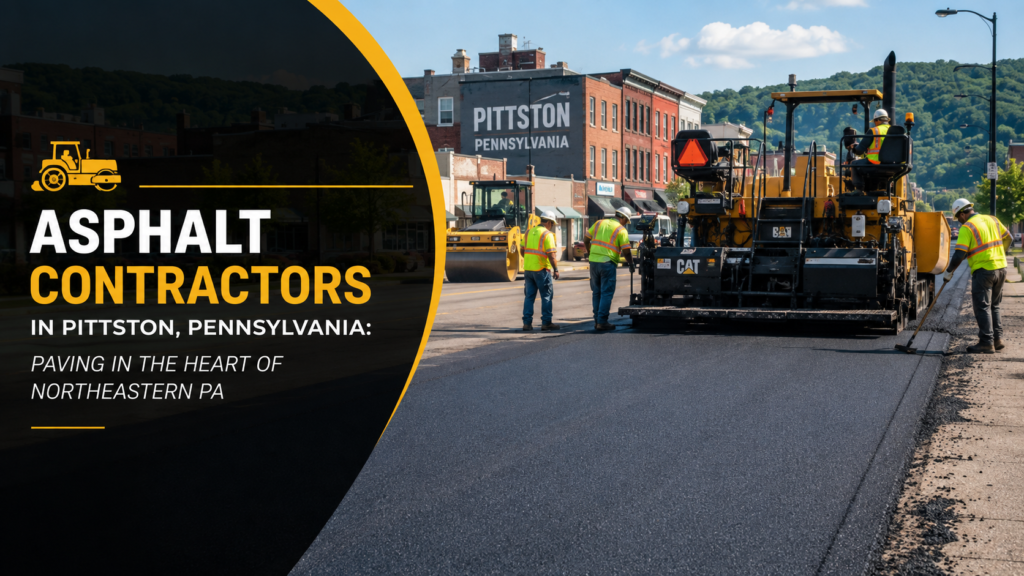
Pittston is a storied city in Luzerne County, sitting along the Susquehanna River in the Wyoming Valley of Northeastern Pennsylvania. Once the center of the anthracite coal mining industry, Pittston has evolved into a diverse community that retains its tight-knit character while adapting to the economic landscape of modern NEPA. The city’s varied terrain from river-flat commercial corridors to the steeper residential neighborhoods climbing toward the surrounding hills creates a range of asphalt paving challenges that demand experienced, locally knowledgeable contractors. This guide explains what Asphalt Contractor Pittston and why Pennsylvania’s climate makes professional paving and maintenance essential.
Why Northeastern Pennsylvania’s Climate Is So Demanding on Asphalt
Pittston and the broader NEPA region experience one of the most challenging climates for asphalt pavement in the United States. The combination of significant annual snowfall, heavy winter precipitation, road salt application, and dramatic seasonal temperature swings creates conditions that attack asphalt surfaces through multiple mechanisms simultaneously.
The freeze-thaw cycle is the primary enemy of pavement in Pittston. Pennsylvania’s climate produces 30 to 50 or more freeze-thaw cycles each winter repeated transitions between subfreezing temperatures and temperatures above 32°F that cause water to alternately expand (as ice) and contract (as liquid) within any void, crack, or pore in the pavement structure. Water that infiltrates a small surface crack freezes and expands by roughly 9 percent, widening the crack. As temperatures rise and the ice melts, the water works deeper into the structure before the next freeze cycle occurs. Over the course of a single NEPA winter, this process can transform hairline surface cracks into gaping potholes and structural failures.
Road salt applied liberally to Pittston’s streets, driveways, and parking lots throughout the winter compounds the damage. Salt lowers the freezing point of water, which increases the number of freeze-thaw cycles that any given weather window produces. More critically, salt accelerates the chemical deterioration of asphalt binder the petroleum-based material that holds asphalt aggregate together making treated asphalt surfaces more brittle and prone to surface raveling over time. Summer UV radiation from the sun further oxidizes the binder, and summer heat softens the asphalt enough that concentrated wheel loads from heavy vehicles can cause rutting.
What Asphalt Contractors Provide in Pittston
New asphalt installation begins with excavation and subbase preparation. In Pittston’s varied terrain, this step is particularly important the hillside residential neighborhoods that climb above the Susquehanna Valley often have soils with challenging drainage characteristics, and the flat commercial corridors near the river can have high water table conditions that affect subbase stability. A properly prepared aggregate base well-graded, adequately thick, and properly compacted distributes traffic loads and provides the drainage that prevents water from accumulating beneath the asphalt surface.
Asphalt resurfacing through overlay is appropriate for Pittston properties where the existing base is sound but the surface has deteriorated through cracking and surface oxidation. The existing surface is cleaned, cracks are filled, and localized failures are addressed before a new lift of asphalt is applied. This approach is substantially less disruptive and less costly than full replacement when the base condition supports it.
Sealcoating is the maintenance service that Pittston property owners most frequently need and most commonly defer. A quality coal tar or asphalt emulsion sealcoat applied every two to three years forms a protective barrier over the asphalt surface that resists water infiltration, slows UV oxidation, and provides chemical resistance to road salt and petroleum products. In NEPA’s climate, where freeze-thaw and salt exposure are severe, sealcoating is not optional maintenance it is the single most effective intervention a property owner can make to extend asphalt life.
Crack sealing with hot rubberized sealant fills existing cracks before water can infiltrate and initiate freeze-thaw damage. The rubberized material is flexible enough to expand and contract with temperature changes while maintaining its bond to the crack walls. Crack sealing performed in fall before the first freeze cycles of winter provides the most protective timing in Pittston’s climate.
Pothole repair addresses the localized failures that develop when water infiltrates the base, saturates and weakens it, and the asphalt surface collapses under traffic loads. Pittston’s pothole problem is significant each spring as the accumulated freeze-thaw damage of winter reveals itself. Professional pothole repair cutting clean edges, removing failed material, and installing compacted hot or cold asphalt patch provides more durable results than simple cold-patch filling.
Residential vs. Commercial Paving in Pittston
Pittston’s residential neighborhoods feature a mix of row homes, single-family houses, and multi-unit residential buildings on lots that range from compact city parcels to more generous hillside properties. Driveway paving is the primary residential service, with many Pittston driveways now showing the effects of years of freeze-thaw cycling and deferred maintenance. Residential driveways in NEPA should be designed with at least 3 inches of compacted asphalt over 6 to 8 inches of compacted aggregate base to resist Pittston’s climate conditions.
Commercial paving in Pittston centers on the city’s Main Street commercial corridors, the Route 315 and Route 11 commercial areas, and the various commercial and light industrial properties throughout the city. Commercial lots experience higher traffic volumes that accelerate surface wear and require thicker pavement sections and more frequent maintenance than residential driveways.
Frequently Asked Questions About Asphalt Contractors in Pittston
When is the best time to pave in Pittston? Asphalt paving in NEPA is a spring-through-fall activity, typically from late April through October. Air and ground temperatures must be above 50°F for proper asphalt compaction. Summer months June through August offer the most reliable paving conditions in Pittston.
How long should an asphalt driveway last in Pittston? A properly installed and maintained driveway in Pittston can last 20 to 25 years. Without sealcoating and prompt crack repair, the harsh NEPA climate can reduce this to 10 to 15 years or less.
Does Pittston require permits for driveway paving? Most residential driveway work on private property does not require a permit, but work affecting curb cuts or public sidewalks requires coordination with the City of Pittston. Commercial projects may have additional permitting requirements. Confirm with the City of Pittston before beginning any work that could affect public infrastructure.